
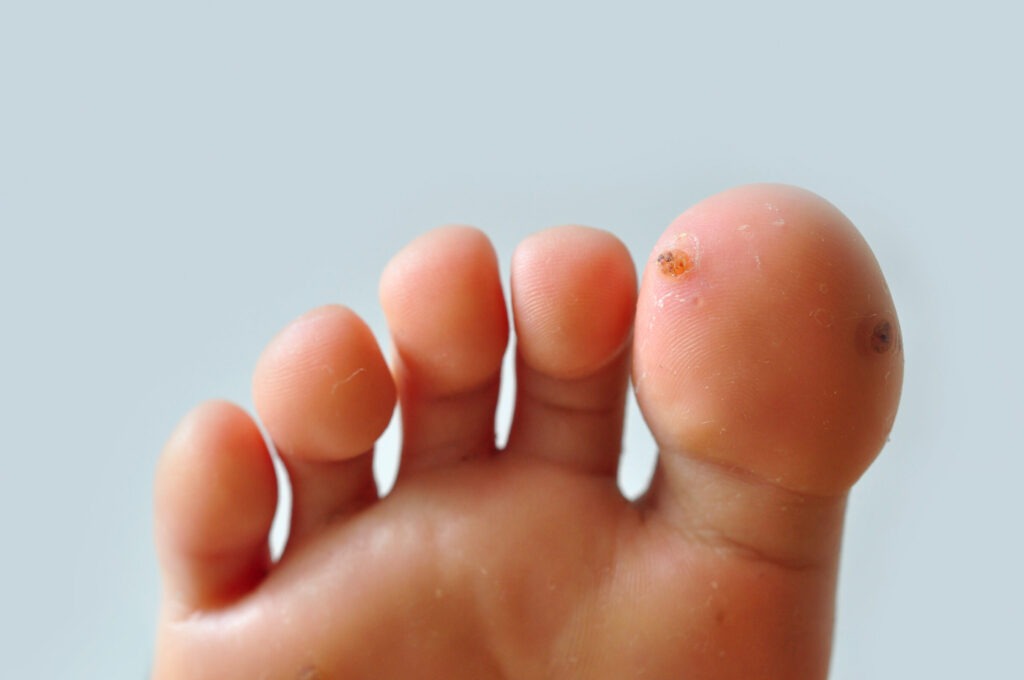
Verrucas (also known as plantar warts) are a common and often stubborn foot problem. Caused by the human papillomavirus (HPV), these lesions can be painful, unsightly, and difficult to get rid of, especially once they become established. While verrucas can be treated at any time of year, winter and early spring are actually the ideal seasons to start treatment.
Here’s why.
Understanding Verrucas
Verrucas are small, rough growths that appear on the soles of the feet. Because we bear weight on them, they can press inward, causing pain with walking or standing. They often:
-
Develop black dots (blocked capillaries)
-
Grow in clusters (mosaic verrucas)
-
Spread through communal surfaces like swimming pools, gyms, and changing rooms
Some verrucas disappear on their own, but many persist for months—or even years—without intervention.
Why Treat Verrucas Now?
1. Treatments Work Better When Feet Are Drier
Cold weather means:
-
Less sweating
-
Fewer hours in hot, enclosed shoes
-
Lower humidity overall
All of these factors help verruca treatments such as acids, cryotherapy, needling, or microwave therapy—work more effectively. A drier environment reduces the spread of the virus and promotes better skin healing.
2. Your Feet Spend More Time Covered
During winter, feet are:
-
Protected inside socks
-
Less exposed to communal areas
-
Less likely to be in public barefoot spaces like pools
This reduces the risk of spreading the virus to others and reinfecting yourself. Treating verrucas now minimises transmission cycles before the busy summer season.
3. You’ll Be Ready for Summer Activities
Verrucas can become more painful when:
-
Walking barefoot on holiday
-
Spending more time swimming
-
Wearing sandals that place pressure on the lesion
Starting treatment now means you’re more likely to be verruca-free and pain-free by the time warm weather returns.
Verrucas often require multiple treatment sessions spaced weeks apart. Beginning in winter gives the treatment plan enough time to work.
4. Thick Winter Skin Makes Diagnosis Easier
Feet often develop thicker skin in winter due to:
-
Wearing heavier footwear
-
Dryer weather
-
Reduced exfoliation
This can make verrucas stand out more clearly to a podiatrist, allowing accurate diagnosis and targeted treatment.
5. Less Discomfort During Healing
Some verruca treatments can temporarily:
-
Cause tenderness
-
Require reduced high-impact activity
-
Require keeping the area dry
Winter footwear and quieter schedules make aftercare easier. You’re less likely to be hindered by summer holidays, outdoor sports, or open-shoe fashion.
Why Professional Treatment Is Worth It
Over-the-counter verruca treatments can be helpful, but they’re often slow or ineffective for deeper or longstanding lesions. A podiatrist can offer:
-
Accurate diagnosis (some corns look very similar to verrucas)
-
A wider range of treatment options
-
Faster and more effective results
-
Tailored care for children, athletes, and people with diabetes or circulation problems
The sooner treatment begins, the easier verrucas are to resolve.
Take the First Step Toward Clear, Comfortable Feet
If you’ve been putting off dealing with a verruca, now is the perfect time. Winter’s cooler, drier conditions allow treatments to work more effectively, and early intervention means healthier, pain-free feet by summertime.
To book an appointment or learn more about verruca treatment options, our team is here to help.