
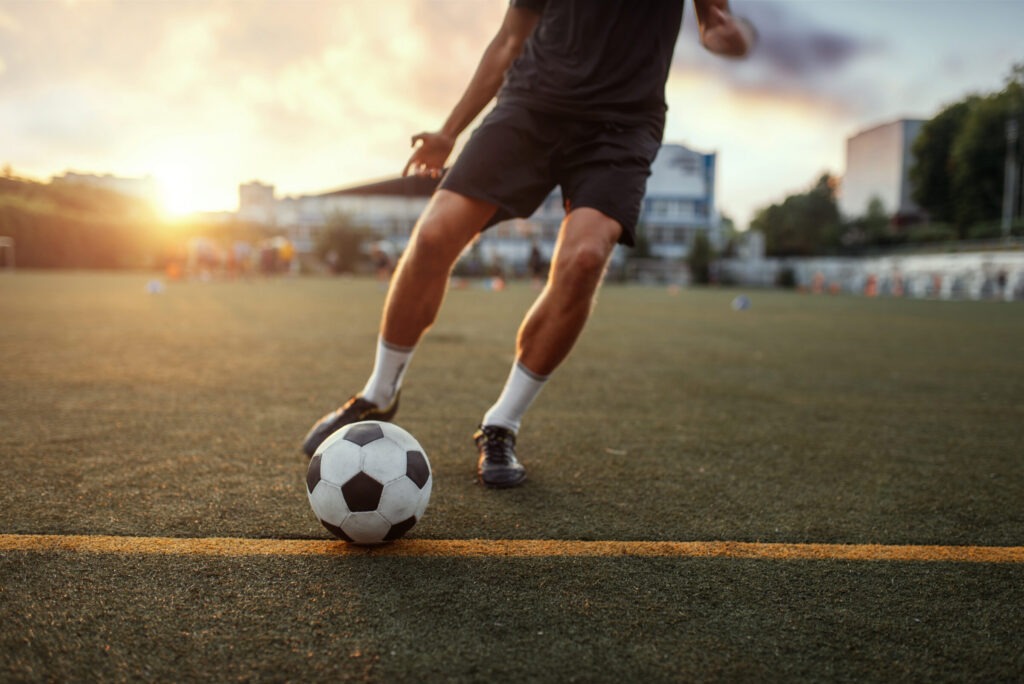
With the World Cup capturing everyone’s attention, many of us are inspired to dust off our football boots and head back onto the pitch. Whether you’re joining a local kickabout, coaching the kids, or simply enjoying a game in the garden, it’s worth remembering that football places significant demands on your feet.
One injury we commonly see in podiatry is turf toe, a painful sprain of the joint at the base of the big toe.
What is turf toe?
Despite its name, turf toe isn’t limited to artificial pitches. It occurs when the big toe is bent upwards beyond its normal range, overstretching the ligaments that support the joint. This often happens during sudden sprints, quick changes of direction, or when pushing off to accelerate or strike the ball.
Signs and symptoms
You may have turf toe if you experience:
- Pain around the base of the big toe
- Swelling or bruising
- Difficulty pushing off when walking or running
- Reduced movement in the big toe
- Pain when trying to stand on your tiptoes
While some mild sprains improve within a couple of weeks, more significant injuries can take much longer if left untreated.
Who is at risk?
Footballers are particularly susceptible because of the repeated sprinting, twisting and kicking involved in the game. However, anyone taking part in sports that involve sudden stops and starts including rugby, hockey and athletics, can develop turf toe.
Risk factors include:
- Playing on hard surfaces
- Wearing boots with very flexible soles
- Returning to sport too quickly after a previous foot injury
- Poor foot biomechanics
What should you do?
If you’ve injured your big toe:
- Rest from sporting activity for a few days.
- Apply ice for 15–20 minutes every few hours during the first 48 hours.
- Wear supportive footwear and avoid walking barefoot.
- Gradually return to activity as symptoms improve.
If pain persists, swelling doesn’t settle, or you’re struggling to walk normally, it’s worth having the injury assessed.
How can a podiatrist help?
At South Dublin Podiatry, we assess not only the injury itself but also the underlying factors that may have contributed to it.
Treatment may include:
- A full biomechanical assessment
- Advice on footwear and football boots
- Taping or strapping techniques to protect the joint
- Exercises to restore strength and mobility
- Orthotic therapy where appropriate to reduce stress on the big toe
Early treatment can help reduce recovery time and lower the risk of long-term stiffness or arthritis in the joint.
Enjoy the football—look after your feet!
The World Cup is a fantastic reminder of how important healthy feet are for enjoying sport. Whether you’re scoring the winning goal or cheering from the sidelines, keeping your feet in good condition will help you stay active all year round.
If you’re experiencing foot pain or have picked up an injury on the pitch, our podiatry team is here to help you get back to doing what you enjoy.