
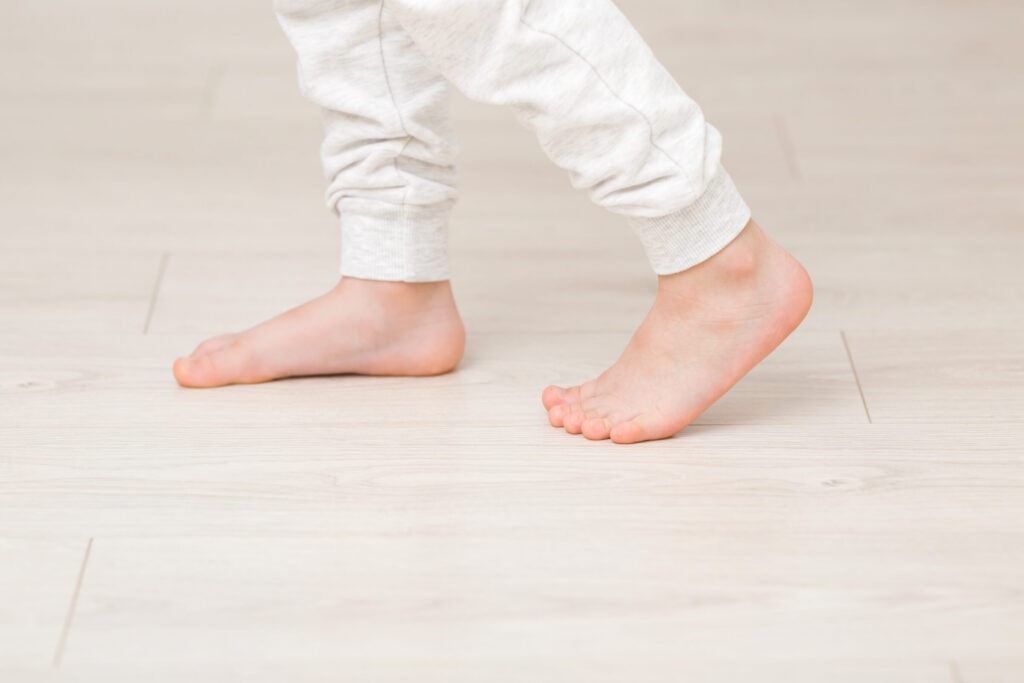
Children are constantly on the move, running around the playground, playing football, taking part in GAA, dancing, doing athletics or simply keeping up with their friends. As they grow and become more active, it’s normal for the way they move to change too.
But how do you know if your child’s movement is simply part of growing, or whether it could benefit from a biomechanical assessment?
A biomechanical assessment looks at how your child’s feet and lower limbs work together during movement. It can be useful for identifying movement patterns that may be affecting how they walk, run or take part in sport.
When might a biomechanical assessment be useful?
There are a few things parents can look out for:
You notice something unusual about the way they walk or run
Perhaps their feet turn in or out, their knees move inwards when running, they appear to roll through their feet or you notice a significant difference between their left and right sides.
These things don’t necessarily mean there is a problem, but if you’re noticing a consistent pattern, an assessment can help you understand what’s happening.
They’re struggling with certain activities
If your child finds running, jumping, balancing or keeping up during sport more difficult than expected, it can be useful to look at how their feet and lower limbs are functioning.
They keep picking up the same sports injuries
Recurring ankle sprains, shin problems or other lower-limb injuries can sometimes be associated with the way a child moves and loads their body.
A biomechanical assessment can help identify contributing factors and provide advice on how these can be managed.
Their shoes are wearing unevenly
Have a look at the soles of your child’s school shoes or runners. Noticeably uneven wear can sometimes give us clues about how they are walking or running.
It’s not a diagnosis by itself, but it can be something worth mentioning during an assessment.
They’ve recently gone through a growth spurt
Children can change rapidly during periods of growth. Their bones, muscles and tendons don’t always develop at exactly the same rate, which can temporarily affect coordination, flexibility and movement.
If you’ve noticed changes in how your child moves during or after a growth spurt, a biomechanical assessment can help give you a clearer picture.
What happens during a children’s biomechanical assessment?
A biomechanical assessment isn’t just about looking at your child’s feet.
We look at the whole lower limb and how it functions, including foot posture, joint movement, muscle strength, flexibility, balance and how the feet and legs move during walking, running and other activities.
We’ll also ask about your child’s usual activities, sports and footwear.
The aim isn’t to make every child’s feet or movement look the same. Children naturally have different foot shapes and movement patterns, and many of these are completely normal.
Instead, we’re looking for anything that may be affecting how your child moves or participates in the activities they enjoy.
Does every child need one?
No — not necessarily.
If your child is active, comfortable and has no concerns with their movement, there may be no reason to have a biomechanical assessment.
An assessment can be particularly useful when there is a specific concern — for example, recurring injuries, difficulties with sport, noticeable changes in movement or simply something about the way your child walks or runs that you’ve been wondering about.
Sometimes, the outcome of an assessment is simply reassurance that everything is developing normally.
Back to school, back to sport
September is a great time to take a closer look at how your child is moving.
With children getting back into football, GAA, athletics, dancing and other activities after the summer, their activity levels can increase quite quickly. It’s also a time when they’re spending more hours in school shoes and sports footwear.
If you’ve noticed a change in their movement or you’re simply curious about whether their feet and legs are functioning as they should, a biomechanical assessment can provide some useful insight.
What can we do to help?
At South Dublin Podiatry, our Children’s Foot Pain assessment looks at your child’s individual movement patterns rather than trying to fit them into a one-size-fits-all approach.
Depending on what we find, we may recommend exercises, footwear advice, changes to activity or other appropriate support. And if everything looks good, we’ll let you know that too!
If you’ve noticed something about the way your child walks, runs or takes part in sport and you’re not sure whether it’s normal, a biomechanical assessment can be a great place to start.