
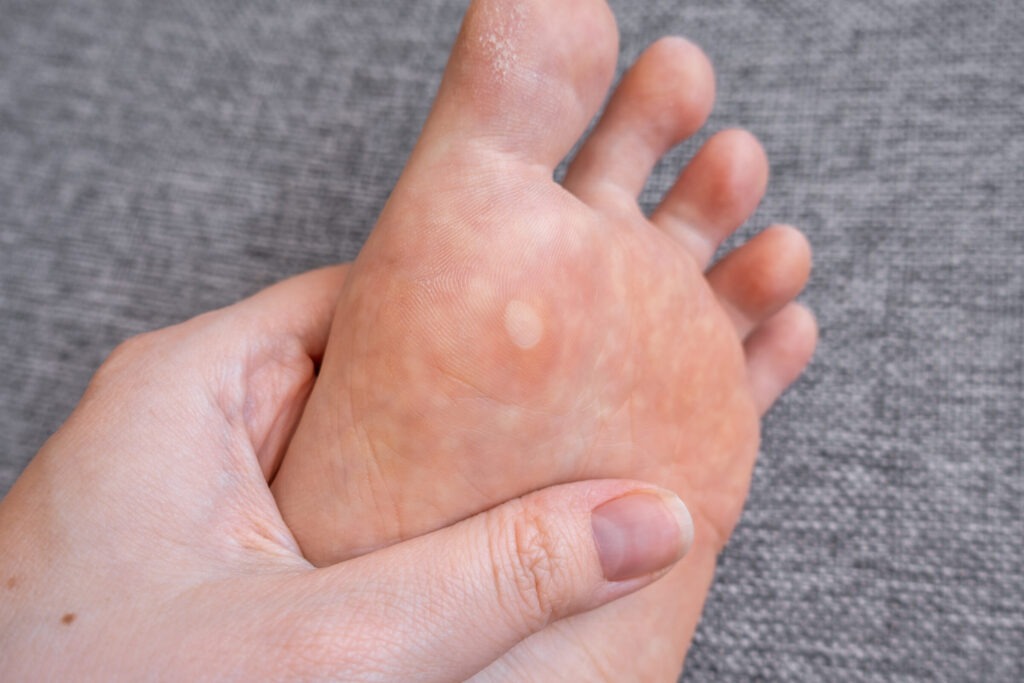
Most of us have had a blister at some point — after a long walk, a new pair of shoes, a day in heels or perhaps after getting back into exercise. But if you seem to be getting blisters on your feet again and again, you might be wondering why.
Blisters are usually your body’s way of protecting the skin from damage. However, repeated blisters can be a sign that something isn’t quite right with your footwear, the way your foot moves, or the amount of pressure and friction your feet are experiencing.
So, why do some people seem to be particularly prone to them?
What actually causes a blister?
A blister develops when repeated friction and pressure cause the layers of skin to separate. Fluid then collects between the layers, creating that familiar bubble.
Common causes include:
- Shoes that are too tight or too loose
- Shoes that rub in a particular area
- New or poorly fitting footwear
- Socks that bunch up or allow your foot to slide
- Increased walking, running or exercise
- Sweaty feet
- Heat and moisture
- Feet sliding around inside the shoe
- Changes in the way you walk or run
Sometimes it only takes one long walk in a new pair of shoes to cause a problem. But if you’re getting blisters in the same place repeatedly, it’s worth looking at what is causing the friction in the first place.
Why do I keep getting blisters in the same spot?
This is one of the most common questions we hear.
If you regularly get a blister in exactly the same area — for example, on the heel, little toe, ball of the foot or between the toes — there may be an underlying reason.
It could be that your shoe is rubbing against that particular area, but it could also be related to how your foot moves inside the shoe.
For example, if your foot rolls or moves in a particular way when you walk or run, this can increase pressure or friction in certain areas. A prominent toe joint, bunion, high-pressure area or particular foot shape can also make some areas more vulnerable.
This is where looking at the whole foot, rather than just the blister, can be useful.
Are my shoes causing my blisters?
Very possibly!
Your shoes don’t necessarily have to feel uncomfortable when you’re standing still for them to cause problems. Your feet can move differently once you’re walking, running or exercising.
A shoe that is too small can create pressure, while one that is too big may allow your foot to slide around, increasing friction.
It’s also worth considering the shape of the shoe. Your foot should have enough room for your toes to move without being squeezed together, while your heel should feel secure without excessive movement.
And remember — just because a shoe is comfortable for a 10-minute walk doesn’t necessarily mean it will be comfortable for a two-hour hike!
What about socks?
Socks can make more difference than you might think.
If your socks become damp with sweat, friction can increase. Socks that are too loose may also bunch up inside your shoe, creating areas of increased pressure.
For walking, running and sport, look for socks that fit well, stay in place and are suitable for the activity you’re doing.
If you’re prone to blisters, it can also be useful to experiment with different sock materials and styles to see what works best for your feet.
Why do I get blisters when I start exercising again?
A sudden increase in activity is a very common trigger.
If you’ve spent the winter being less active and suddenly start running, walking longer distances, going to the gym or playing more sport, your feet may need time to adapt.
It’s not just your muscles that need to get used to an increase in activity — your skin does too.
Increasing your activity gradually and making sure your footwear is appropriate can help reduce the risk of developing blisters.
Should I pop a blister?
In general, it’s best to leave an intact blister alone where possible. The skin acts as a natural protective barrier underneath.
Try to reduce the friction and pressure on the area and keep it clean and protected.
If a blister has already burst, keep the area clean and protect it with an appropriate dressing while it heals.
If you have a medical condition that affects healing or circulation, such as diabetes, or you notice increasing redness, swelling, warmth, discharge or worsening pain, it’s important to seek professional advice.
How can I stop getting blisters?
The key is to work out why you’re getting them in the first place.
Some simple things that can help include:
- Make sure your shoes fit properly.
- Avoid suddenly increasing your walking or running distance.
- Wear well-fitting socks suitable for your activity.
- Keep an eye on areas that regularly rub.
- Don’t ignore shoes that consistently cause irritation.
- Consider using a suitable blister prevention product on known problem areas.
- If you repeatedly get blisters in the same location, have your feet assessed.
Still getting blisters?
If you’re constantly getting blisters despite changing your shoes and socks, it may be worth looking beyond the blister itself.
At South Dublin Podiatry, we can assess your feet, footwear and the way your feet move to help identify what could be contributing to repeated pressure or friction.
After all, treating the blister is one thing — working out why it keeps happening is another.
If the same blister keeps coming back, don’t just put a plaster over it and hope for the best. Your feet might be trying to tell you something.