
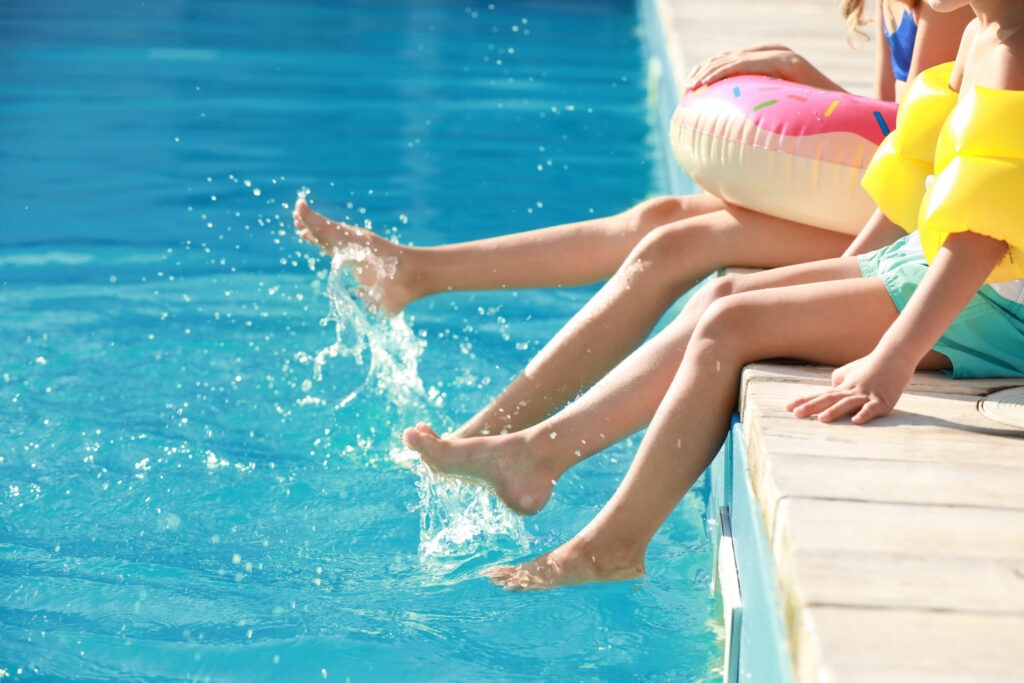
As the summer holidays have started for many, we look forward to spending time by the pool. Whether you’re relaxing at a hotel, enjoying a day at a leisure centre, or chasing kids around the water park, it’s tempting to kick off your sandals and go barefoot. While it may feel comfortable and convenient, walking barefoot around pools can expose your feet to several risks.
Verrucas
One of the most well-known concerns associated with barefoot walking around pools is verrucas. Verrucas are caused by the human papillomavirus (HPV), which thrives in warm, moist environments such as swimming pool surrounds, changing rooms, and communal showers.
The virus can enter the skin through tiny cuts, cracks, or abrasions on the feet. While not everyone who comes into contact with the virus will develop a verruca, the risk increases when feet are unprotected in communal wet areas.
Fungal Infections
Athlete’s foot is another common condition that can be picked up around swimming pools and changing facilities. Fungi flourish in damp environments, and walking barefoot on contaminated surfaces can increase the likelihood of infection.
Symptoms may include:
- Itching or burning between the toes
- Red, flaky, or peeling skin
- Cracked skin
- Unpleasant odour
If left untreated, athlete’s foot can spread to the toenails, leading to fungal nail infections that are often more difficult to manage.
Slips and Falls
Pool surrounds are naturally wet and slippery. Walking barefoot may seem safer than wearing loose-fitting footwear, but wet tiles can still increase the risk of slips, falls, and injuries.
Cuts, bruises, sprains, and even fractures can occur following a fall. Older adults and those with balance difficulties should be particularly cautious.
Cuts and Puncture Wounds
Although pool areas are generally well maintained, sharp objects such as broken tiles, stones, or debris can occasionally be present. Walking barefoot increases the risk of cuts and puncture wounds.
For people living with diabetes or reduced circulation, even minor injuries can become serious if they do not heal properly.
Burns from Hot Surfaces
If you’ve ever walked barefoot around an outdoor pool on a sunny day, you’ll know how quickly tiles and paving can heat up. Hot surfaces can cause discomfort and, in extreme cases, burns to the soles of the feet.
Children and older adults may be especially vulnerable as they may not recognise the danger until discomfort occurs.
How to Protect Your Feet
The good news is that protecting your feet is simple:
- Wear flip-flops, sliders, or pool shoes around communal pool areas.
- Dry your feet thoroughly after swimming, especially between the toes.
- Avoid sharing towels and footwear.
- Check your feet regularly for any cuts, blisters, or changes in the skin.
- Seek professional advice if you notice signs of a verruca, athlete’s foot, or a persistent foot problem.
The Bottom Line
Going barefoot around the pool may seem harmless, but it can increase your risk of infections, injuries, and foot problems that may linger long after your holiday ends. A simple pair of pool shoes can go a long way in protecting your feet and keeping you active throughout the summer.
If you have concerns about a verruca, fungal infection, or any other foot problem, our podiatry team is here to help. Contact the clinic to book an appointment and keep your feet healthy all summer long.