
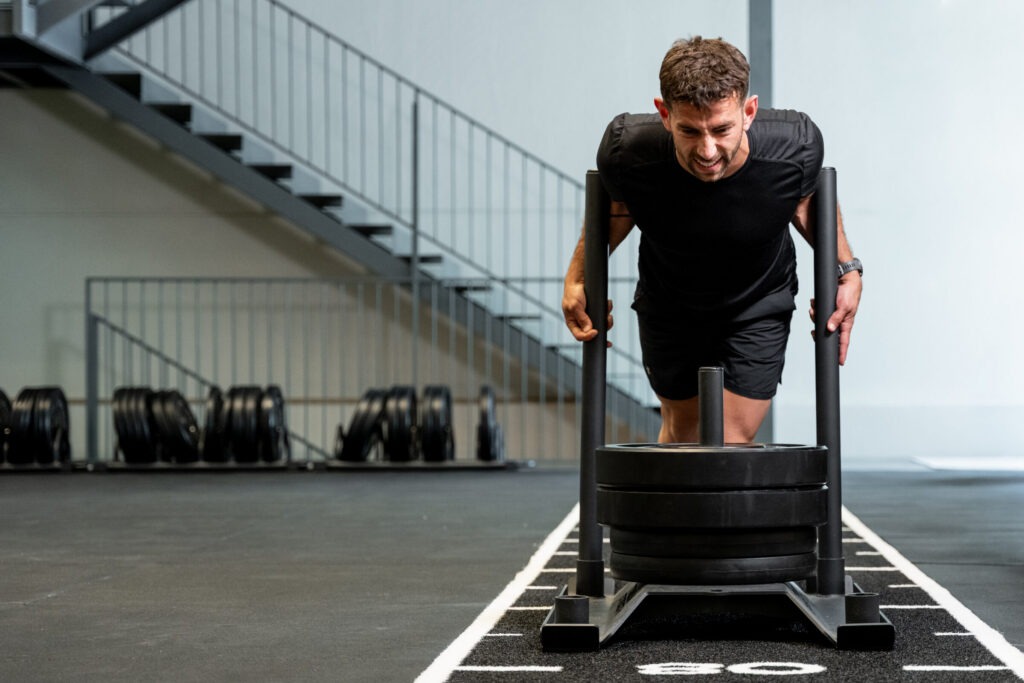
HYROX has taken the fitness world by storm, combining running, strength and endurance into one challenging event. Whether you’re a regular competitor or just starting your HYROX journey, there’s no denying that it puts your body through its paces!
With eight 1km runs combined with eight functional workout stations, including sled pushes, sled pulls, burpee broad jumps, rowing, farmers carries and weighted lunges, HYROX demands a lot from your feet and lower limbs.
But while training plans often focus on improving running times, building strength and increasing endurance, one area that can sometimes be overlooked is foot and lower-limb health.
So, what should HYROX athletes be looking out for?
1. Plantar Fasciitis and Heel Pain
All that running, combined with the repetitive loading involved in exercises such as lunges and sled pushes, can place considerable stress on the plantar fascia – the thick band of tissue running along the bottom of your foot.
If you’re experiencing pain around your heel, particularly with your first steps in the morning or after periods of rest, it could be a sign of plantar fasciitis.
Increasing your training volume too quickly, inadequate recovery and changes in running surfaces can all contribute to heel pain.
2. Achilles Tendon Pain
Your Achilles tendon plays a huge role in almost everything you do during HYROX. From running and jumping to pushing heavy sleds, it works hard to help propel you forward.
Repeated loading can sometimes lead to Achilles tendinopathy, which may cause pain, stiffness or tenderness at the back of your heel or lower calf.
Pay attention to morning stiffness or discomfort that appears during or after training. Ignoring early symptoms and continuing to push through can make recovery more difficult.
3. Forefoot Pain and Metatarsalgia
Running, burpees, lunges and weighted movements can place significant pressure on the ball of your foot.
Metatarsalgia is a term used to describe pain and inflammation around the metatarsal region, which can feel like a burning sensation, aching or as though you’re walking on a small stone.
Footwear that doesn’t provide a suitable fit, excessive training loads and biomechanical factors can all contribute to forefoot discomfort.
If you’re regularly experiencing pain in this area, it’s worth getting it assessed rather than simply trying to train through it.
4. Blisters, Black Toenails and Nail Problems
Sometimes it’s the smaller problems that can make training particularly uncomfortable!
Long runs, repeated friction and footwear that doesn’t fit properly can lead to blisters, bruised toenails and black toenails.
A good pair of training socks, properly fitted footwear and keeping toenails trimmed can make a real difference.
It’s also important to make sure your shoes have enough room around the toes, particularly when your feet swell during longer training sessions.
5. Knee, Calf and Ankle Problems
HYROX isn’t just a running event. The combination of running with heavy resistance exercises places different demands on the muscles, joints and tendons throughout your lower limbs.
Calf strains, ankle discomfort, knee pain and muscle fatigue can all occur when training loads increase beyond what your body is prepared for.
Foot posture, lower-limb alignment, muscle strength and movement patterns can also influence how forces are distributed through your legs.
This is where understanding your biomechanics can be particularly useful.
Could a Biomechanical Assessment Help?
If you’re regularly experiencing foot or lower-limb pain during HYROX training, a biomechanical assessment may help identify contributing factors.
At South Dublin Podiatry, our podiatrists can assess:
- Foot posture and alignment.
- Walking and running patterns.
- Lower-limb movement and biomechanics.
- Joint mobility and muscle function.
- Areas of increased pressure or loading.
Depending on your assessment findings, we may recommend exercises, footwear advice, changes to your training approach or custom orthotics where appropriate.
The aim is to identify what’s contributing to your discomfort and help you get back to training comfortably and confidently.
5 Ways to Look After Your Feet During HYROX Training
A few simple habits can help keep your feet and lower limbs in good shape throughout your training programme.
1. Build up gradually: Avoid increasing your running distance, intensity and strength training all at once. Give your body time to adapt.
2. Choose the right footwear: Your shoes should be comfortable, supportive and appropriate for your training. Make sure there’s enough room for your toes and that your footwear suits the demands of your sessions.
3. Don’t neglect recovery: Rest days are just as important as training days. Your muscles, tendons and joints need time to recover from repeated loading.
4. Strengthen your feet and calves: Calf raises, balance exercises and foot-strengthening exercises can help improve strength and capacity. Build these into your routine gradually.
5. Don’t ignore persistent pain: There’s a difference between normal post-workout muscle soreness and pain that keeps returning. If something doesn’t feel right, get it checked before it becomes a bigger problem.
Ready to Take on HYROX?
HYROX is a fantastic way to challenge yourself, improve your fitness and work towards a new goal. But looking after your feet and lower limbs should be part of your training plan too.
If you’re experiencing heel pain, arch pain, Achilles discomfort, recurring blisters or any other foot or lower-limb issues, our team at South Dublin Podiatry is here to help.
Don’t let foot pain hold you back from reaching your next fitness goal!